



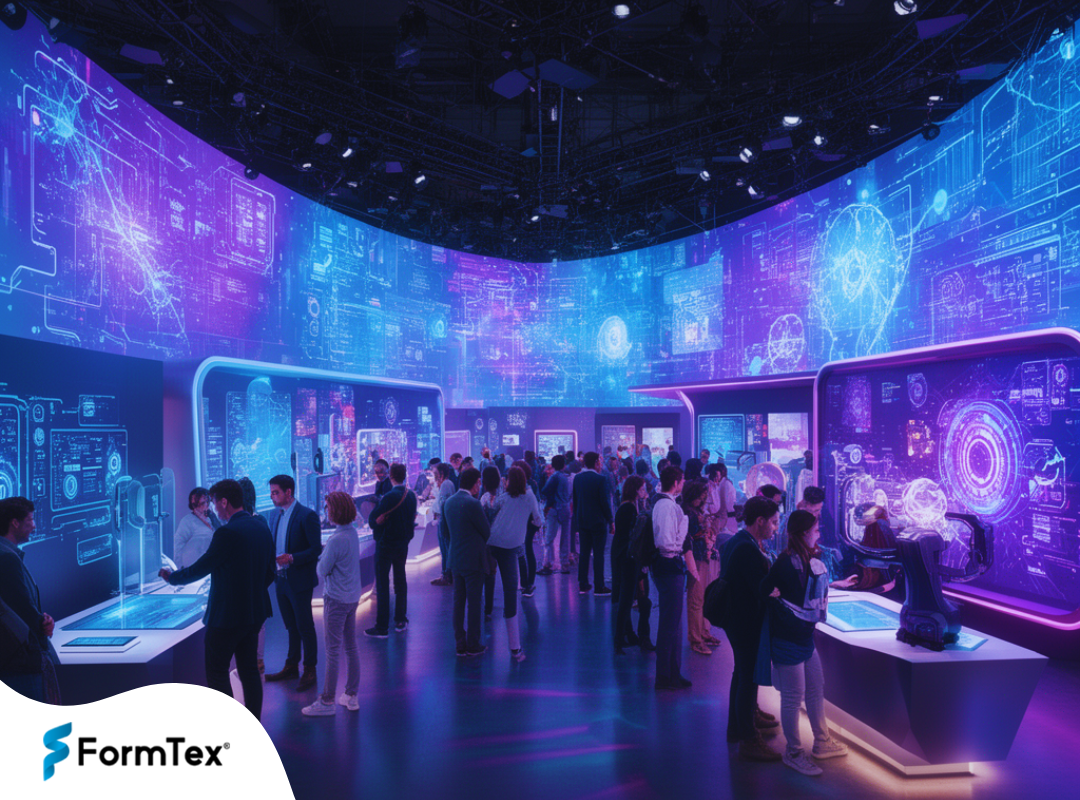
Trade shows remain one of the most powerful B2B lead generation channels. However, in 2026, the difference between simply collecting business cards and generating real sales opportunities lies in how effectively you use technology.
Artificial Intelligence (AI) can transform how you attract, qualify, and convert leads at exhibition events. Instead of relying on manual processes and post-event chaos, AI allows you to build a predictable, scalable system.
Here’s how to use AI to generate more qualified leads at trade shows - and convert them into measurable revenue.
1. Use AI Before the Event to Attract the Right Visitors
Lead generation does not start at the stand. It starts weeks before the event.
AI can help you:
-
Analyze previous trade show data to identify your ideal visitor profile
-
Segment prospects by industry, company size, or decision-making role
-
Personalize LinkedIn outreach and email invitations
-
Generate targeted messaging tailored to the specific event audience
Instead of sending generic invitations, AI-driven personalization allows you to craft messages that directly address your prospects’ pain points.
Personalized pre-event outreach significantly increases booth visit rates and meeting bookings.
2. Qualify Leads in Real Time Using AI
One of the biggest challenges at trade shows is collecting too many low-quality leads.
AI-powered qualification tools can help you filter prospects in real time.
Practical applications:
-
Smart digital forms that adapt questions based on previous answers
-
Badge scanning integrated directly into your CRM
-
Automated lead scoring based on predefined criteria (budget, authority, timeline, industry)
-
Instant classification into hot, warm, or cold categories
This means your sales team immediately knows which leads require urgent follow-up.
Instead of manually sorting spreadsheets after the event, your system does it instantly.
3. Capture Leads Automatically with QR Codes and AI Chatbots
Modern exhibition stands can integrate simple but powerful tools:
-
Visible QR codes placed strategically across the booth
-
Mobile-optimized landing pages
-
AI chatbots that guide visitors through qualification questions
This approach offers several advantages:
-
Visitors can leave their information even if your team is busy
-
Data is structured and standardized
-
Leads are automatically stored in your CRM
AI chatbots can also personalize content delivery - for example, sending different case studies depending on the visitor’s industry.
This improves engagement while increasing the number of qualified contacts collected.
4. Personalize Booth Messaging with AI Insights
AI is not only useful for lead capture. It can also improve your exhibition stand communication.
By analyzing industry data and audience behavior, AI can help you:
-
Generate benefit-driven headlines
-
Create niche-specific value propositions
-
Identify the strongest proof points for your target segment
-
Adapt messaging to different buyer personas
A clear, targeted headline such as “Reduce Operational Costs by 25% in 6 Months” performs significantly better than a generic product description.
Better messaging increases booth stop rate - which directly impacts lead volume.
5. Automate Post-Event Follow-Up
Most contracts are not signed at the booth. They are closed in the weeks or months following the event.
Speed and personalization determine success.
AI can automate:
-
Personalized follow-up emails sent within 24 hours
-
Meeting scheduling links tailored to each lead
-
Proposal drafts generated based on discussion notes
-
Lead prioritization based on engagement signals
For example, a “hot” lead who requested pricing can automatically receive a customized proposal, while a “warm” lead can enter an educational email sequence.
Fast and relevant follow-up can increase conversion rates by 20–40%.
6. Use AI to Measure Trade Show ROI Accurately
Trade show ROI should be measured beyond the number of collected business cards.
AI analytics tools can track:
-
Cost per lead
-
Lead-to-opportunity conversion rate
-
Opportunity-to-contract rate
-
Revenue generated per event
-
Time-to-close by lead category
By analyzing these metrics, you can identify:
-
Which messages generated the most engagement
-
Which buyer profiles converted best
-
Which sales representatives performed most effectively
-
Which events deliver the highest ROI
This data-driven approach allows you to continuously optimize future trade show participation.
7. How AI Increases Trade Show Profitability
Integrating AI into your trade show strategy delivers clear advantages:
-
Higher number of qualified leads
-
Lower cost per acquisition
-
Faster follow-up cycles
-
Improved sales team efficiency
-
Reduced loss of potential opportunities
Instead of relying on guesswork, you create a structured system that connects booth design, sales execution, and digital automation.
The result? A trade show becomes a revenue engine - not just a branding exercise.
AI does not replace your sales team. It amplifies their performance.
From pre-event targeting and real-time qualification to automated follow-up and ROI analysis, AI transforms how companies generate leads at trade shows.
In an increasingly competitive exhibition environment, businesses that combine strong booth presence with intelligent automation gain a measurable advantage.
Trade shows remain one of the most powerful sales channels. With AI, they become predictable, scalable, and significantly more profitable.
Reviews