



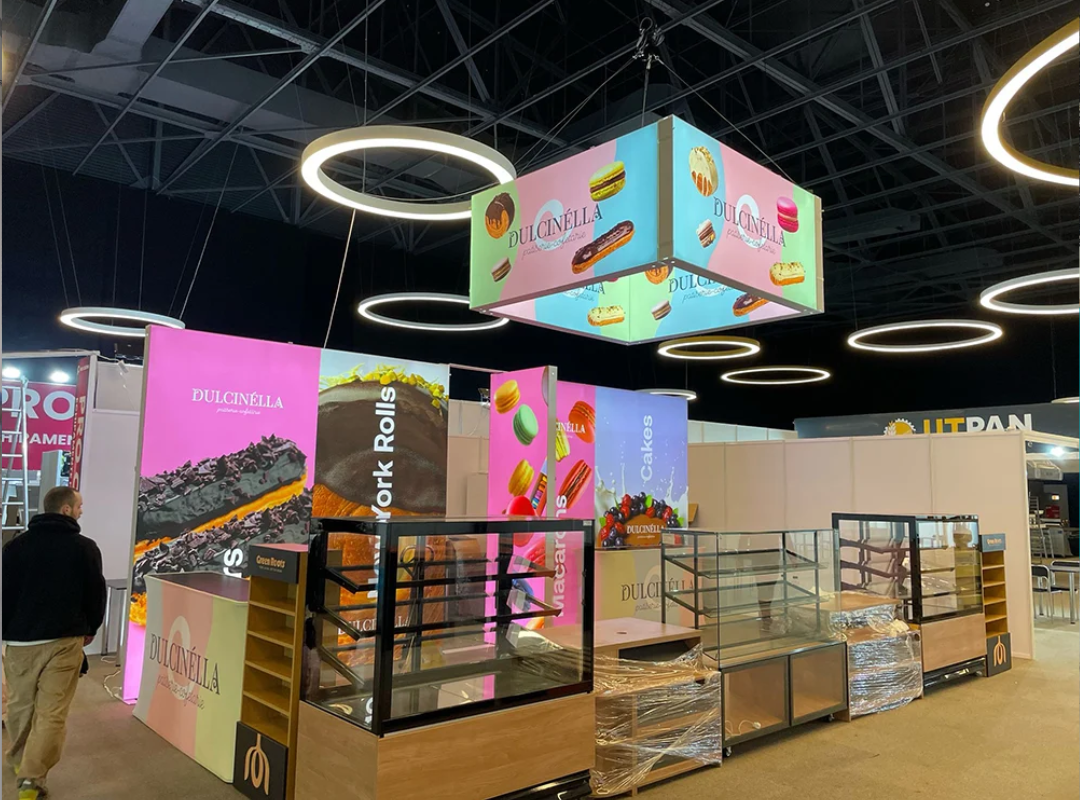
When companies prepare for trade shows, one of the most important decisions they face is whether to rent an exhibition stand or invest in a custom-built one, and while at first glance this may seem like a purely logistical or budget-related choice, in reality it has a direct impact on how the brand is perceived, how effectively it attracts visitors, and ultimately how many sales opportunities it can generate during and after the event.
Many businesses choose to rent a stand because it appears to be the simpler and more flexible option, especially when participating in events occasionally or when testing new markets, and while this approach can reduce upfront costs and eliminate the need for long-term planning, it often comes with limitations that become visible exactly where it matters most, namely in the ability to differentiate, to communicate clearly, and to create a memorable presence that supports sales conversations.
A rented stand is usually based on standardized structures and layouts, which means that even though it may look clean and functional, it rarely reflects the uniqueness of your brand or the specificity of your value proposition, and in a crowded exhibition environment where multiple companies are competing for attention, this lack of differentiation can result in lower engagement, fewer meaningful interactions, and ultimately a reduced number of qualified leads.
On the other hand, a custom exhibition stand offers the possibility to design every element around your sales objectives, your target audience, and the type of interactions you want to generate, which means that instead of adapting your strategy to the limitations of a generic structure, you create a space that actively supports your commercial goals, whether that involves attracting a high volume of visitors, facilitating in-depth discussions, or showcasing complex solutions in a clear and structured way.
The impact of this difference becomes even more evident when we look at visitor behavior, because in the first few seconds, people decide whether to stop or move on based on visual cues and clarity of message, and a custom stand allows you to control these elements much more precisely, using large-format textile graphics, integrated lighting, and coherent branding to communicate instantly what you offer and why it is relevant, while a rented stand often forces you to work within predefined constraints that limit your ability to stand out.
At the same time, it is important to recognize that the decision is not simply about visual appeal, but about how the stand supports the entire sales process, from attracting attention to capturing leads and enabling follow-up, and in this context, custom stands provide a clear advantage because they can be designed with specific zones for interaction, qualification, and discussion, allowing your sales team to operate more efficiently and to manage multiple conversations without losing opportunities.
However, this does not mean that rented stands cannot generate results, because when used strategically, especially in combination with strong messaging and a well-prepared sales team, they can still deliver value, particularly for companies that are at an early stage of testing events or that participate infrequently, but the key limitation remains the lack of consistency and scalability, since each new event may require adjustments, redesigns, or compromises that affect overall performance.
From a financial perspective, the comparison becomes more nuanced when we move beyond the initial cost and look at long-term return on investment, because while renting may seem more affordable for a single event, repeated participation can quickly add up, and without building a consistent brand presence, the impact of each appearance remains limited, whereas a custom stand, especially one based on modular textile systems, can be reused, adapted, and scaled across multiple events, reducing cost per use and increasing overall efficiency.
Another important aspect is brand perception, because a well-designed custom stand communicates stability, professionalism, and attention to detail, which can influence how potential clients perceive your company even before the conversation begins, and this perception often plays a crucial role in B2B environments where trust and credibility are key factors in the decision-making process.
Ultimately, the question is not which option is universally better, but which one aligns more effectively with your sales objectives, your event strategy, and your growth plans, because if your goal is to participate occasionally and explore opportunities, renting may provide enough flexibility, but if you aim to turn trade shows into a consistent and predictable sales channel, investing in a custom stand becomes a strategic move that supports long-term performance.
In conclusion, both rented and custom exhibition stands can generate sales, but the difference lies in how much control you have over the process, how consistently you can execute your strategy, and how effectively your stand supports conversion, and in a competitive environment where attention is limited and expectations are high, the companies that invest in tailored, scalable solutions are the ones that manage to transform visibility into real business results.
Reviews