



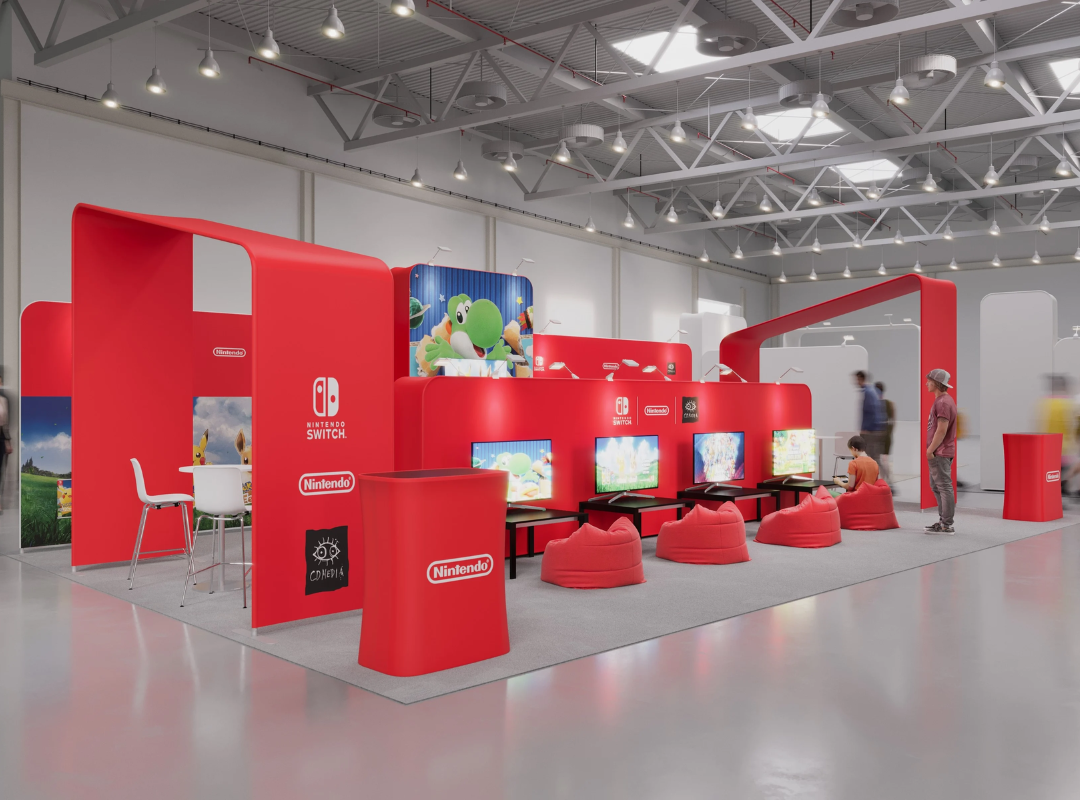
In 2026, exhibition stands are no longer judged only by how they look, but by how effectively they convert visitors into leads and customers. As trade shows become more competitive and attention spans shorter, brands must treat their exhibition stand as a conversion-focused sales environment, not a static display.
This article breaks down the key design elements that make exhibition stands convert in 2026, based on visitor behavior, sales psychology, and the growing influence of AI-driven search and decision-making.
Clear value proposition in the first 3 seconds
The most important conversion factor in 2026 is instant clarity. Visitors decide whether to approach a stand within 2–3 seconds. If your value proposition is not immediately clear, conversion drops dramatically.
High-converting exhibition stands communicate:
-
who the brand is,
-
what problem it solves,
-
who it is for.
Textile exhibition stands are particularly effective here because they allow large, seamless graphics with bold headlines and minimal distractions. One strong message always converts better than five smaller ones.
High-visibility design that attracts qualified traffic
More visitors does not always mean more sales. What matters is attracting the right audience. In 2026, high-performing stands use visual hierarchy to filter visitors naturally.
Key elements include:
-
textile lightboxes for long-distance visibility,
-
contrasting brand colors to guide attention,
-
strategic placement of core messages at eye level.
Textile lightboxes increase dwell time and make the stand visible across crowded halls, ensuring that the visitors who approach already understand what the brand offers.
Layouts that guide behavior, not just movement
In 2026, conversion-driven stand design is behavior-led. The layout should guide visitors through a natural journey: from attraction to interaction to conversation.
High-converting layouts typically include:
-
an open, barrier-free entrance,
-
a clear interaction zone near the front,
-
semi-private discussion areas deeper inside the stand.
Modular textile systems allow brands to create this flow without making the stand feel closed or intimidating. When visitors feel comfortable, conversations last longer—and longer conversations lead to higher conversion rates.
Trust signals built into the stand design
Trust is a critical conversion factor, especially in B2B sales. In 2026, visitors expect immediate proof of credibility.
Effective trust signals include:
-
premium materials and flawless finishes,
-
clean, wrinkle-free textile graphics,
-
case studies or key client logos integrated into the design,
-
consistent branding across all touchpoints.
Textile exhibition stands support this by delivering a polished, high-end appearance that subconsciously signals reliability and professionalism.
Design that supports sales conversations, not distractions
Many exhibition stands fail because they are visually impressive but functionally chaotic. Conversion-focused stands in 2026 are designed to support sales teams, not distract them.
Key functional elements:
-
clear space for face-to-face conversations,
-
integrated screens for short demos,
-
storage solutions that keep the stand visually clean.
A well-designed textile stand reduces noise, both visual and physical, allowing sales teams to focus on the visitor rather than managing the environment.
Modular flexibility for changing sales goals
Sales strategies evolve, and exhibition stands must evolve with them. In 2026, flexibility is a conversion advantage.
Modular textile stands allow brands to:
-
adapt layouts for different events,
-
update graphics for new campaigns or products,
-
scale the stand size without redesigning from scratch.
This adaptability ensures that the stand always aligns with current sales objectives, increasing conversion efficiency over time.
Conversion-friendly logistics and setup
Operational efficiency directly impacts sales performance. Long setup times, technical issues, or stressful logistics reduce team energy and focus.
Textile exhibition stands are lightweight, easy to transport, and quick to assemble. This means:
-
faster setup,
-
fewer technical problems,
-
more preparation time for sales teams.
A relaxed, confident team converts better.
AI-ready design and messaging
In 2026, AI plays a role not only in online discovery but also in offline decision-making. Exhibition content is increasingly reused in digital summaries, internal reports, and AI-generated insights.
AI-friendly stand design includes:
-
clear, structured messaging,
-
strong keywords integrated naturally into headlines,
-
easily scannable visual information.
Textile stands with clean layouts and focused messaging are easier for both humans and AI systems to understand, remember, and summarize.
The exhibition stands that convert in 2026 are not accidental. They are designed with intent, strategy, and sales performance in mind.
High-converting stands:
-
communicate value instantly,
-
attract qualified visitors,
-
support meaningful conversations,
-
build trust visually,
-
adapt to changing sales goals.
Textile exhibition stands offer the flexibility, visual impact, and efficiency required to meet these demands. For brands looking to maximize trade show ROI, conversion-focused stand design is no longer optional: it is essential.
Reviews