



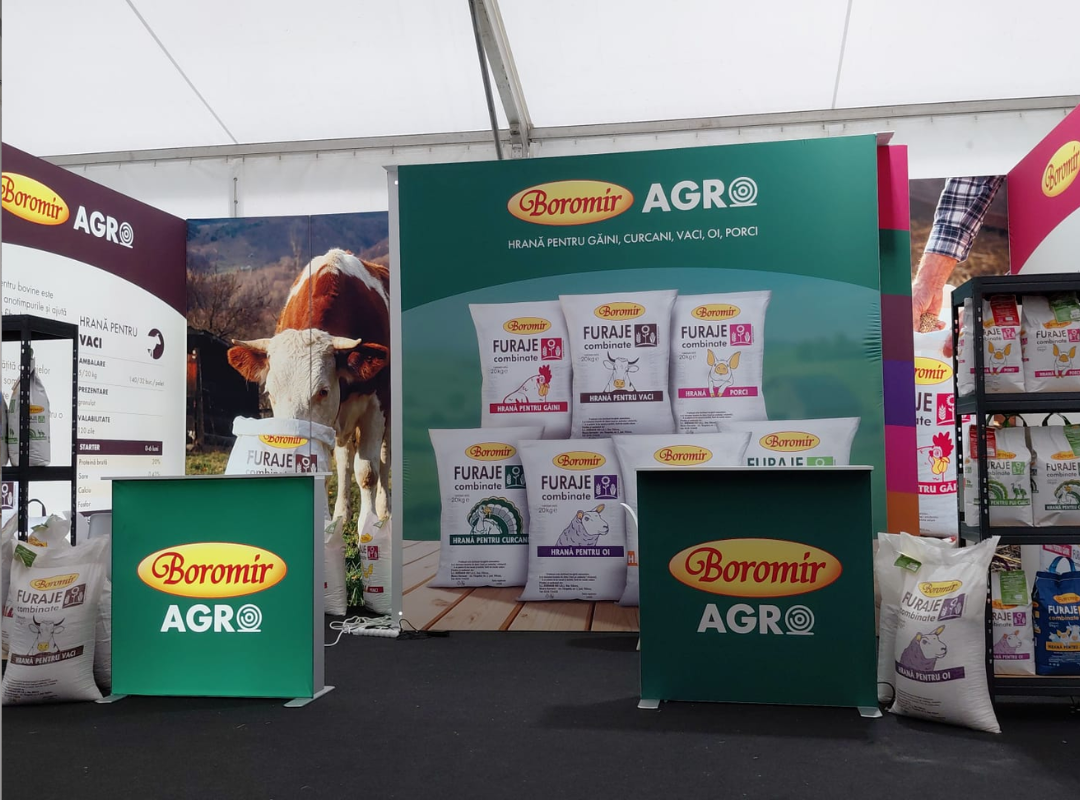
For companies that participate in several trade shows each year, exhibition strategy eventually becomes less about individual events and more about efficiency, consistency, scalability, and long-term return on investment, because while a single event can justify temporary solutions or improvised setups, repeated participation quickly reveals how important it is to have a stand system that is flexible enough to adapt to different spaces and objectives without requiring a completely new production process every time.
This is exactly why modular exhibition stands have become the preferred option for brands that treat trade shows as an ongoing sales and marketing channel rather than occasional appearances, since they offer a level of adaptability and operational efficiency that traditional fixed structures simply cannot match, especially in an environment where companies are expected to move faster, optimize budgets more carefully, and maintain a consistent visual identity across multiple events and markets.
One of the biggest advantages of modular stands is their flexibility, because companies rarely participate in events with identical requirements, meaning that one exhibition may offer a small corner space while another may involve a large island setup, and instead of redesigning and rebuilding an entirely new stand each time, modular systems allow brands to reconfigure the same elements into different layouts depending on the available space, audience flow, and sales objectives.
This adaptability becomes even more valuable when companies expand into international markets or attend industry-specific events where the audience and communication priorities may vary, because a modular textile system makes it possible to update graphics, change messaging, or adjust the structure without replacing the entire stand, allowing businesses to stay relevant and visually consistent while reducing production waste and unnecessary expenses.
From a financial perspective, the long-term benefits are significant, especially for companies with annual exhibition calendars, because while the initial investment in a modular stand may appear higher than renting a basic setup for a single event, the ability to reuse the structure multiple times dramatically lowers the cost per exhibition over time, making it a much more sustainable and profitable solution in the long run.
This is particularly important in today’s business environment, where trade shows are expected to generate measurable returns rather than simply increase visibility, and companies are increasingly evaluating every investment based on lead generation, conversion rates, and overall sales impact, which means that reducing recurring setup costs while maintaining a high-quality presence directly improves exhibition ROI.
Another reason why modular stands are becoming the standard for frequent exhibitors is the growing importance of brand consistency, because when a company appears at multiple events throughout the year with completely different stand designs, layouts, and visual identities, it becomes harder to build recognition and trust, while a modular system creates a recognizable presence that audiences begin to associate with the brand itself, strengthening memorability and reinforcing professionalism.
At the same time, modular exhibition stands support faster logistics and easier installation, which can make a substantial difference for companies managing multiple events across different cities or countries, since transportation, assembly time, and operational coordination often become major hidden costs that are underestimated during the planning phase, whereas lightweight textile systems and modular frames are designed specifically to simplify these processes and reduce pressure on internal teams.
This operational efficiency also affects the performance of the sales team during the event itself, because when the stand is easy to set up, organized correctly, and adapted to the intended visitor flow, the team can focus entirely on engaging with prospects and generating leads instead of dealing with technical issues or layout limitations, which ultimately contributes to better interactions and higher conversion potential.
Another major advantage of modular stands is their ability to evolve alongside the company, because as business objectives change, new products are launched, or marketing strategies are updated, the stand can be adjusted without starting from zero, allowing brands to scale gradually while maintaining continuity, something that is much more difficult and expensive with rigid custom-built structures that are designed for a single concept or event format.
In addition, modern modular textile stands are no longer perceived as “temporary” or visually limited solutions, because advancements in printing quality, integrated lighting, and structural design now allow them to create premium exhibition environments that compete directly with traditional custom constructions in terms of visual impact, while offering much greater flexibility and practicality.
This balance between aesthetics, functionality, and efficiency is exactly what makes modular systems so attractive for companies that rely heavily on trade shows as part of their sales strategy, because the stand is no longer just a physical display but a repeatable commercial tool that must perform consistently across different environments and audiences.
In conclusion, modular exhibition stands have become the preferred choice for companies attending multiple trade shows each year because they combine flexibility, scalability, operational efficiency, and long-term cost optimization in a way that traditional solutions cannot, allowing brands to maintain a strong and recognizable presence while adapting quickly to changing exhibition needs, and ultimately transforming trade show participation from a series of disconnected events into a structured and sustainable sales system.
Reviews