



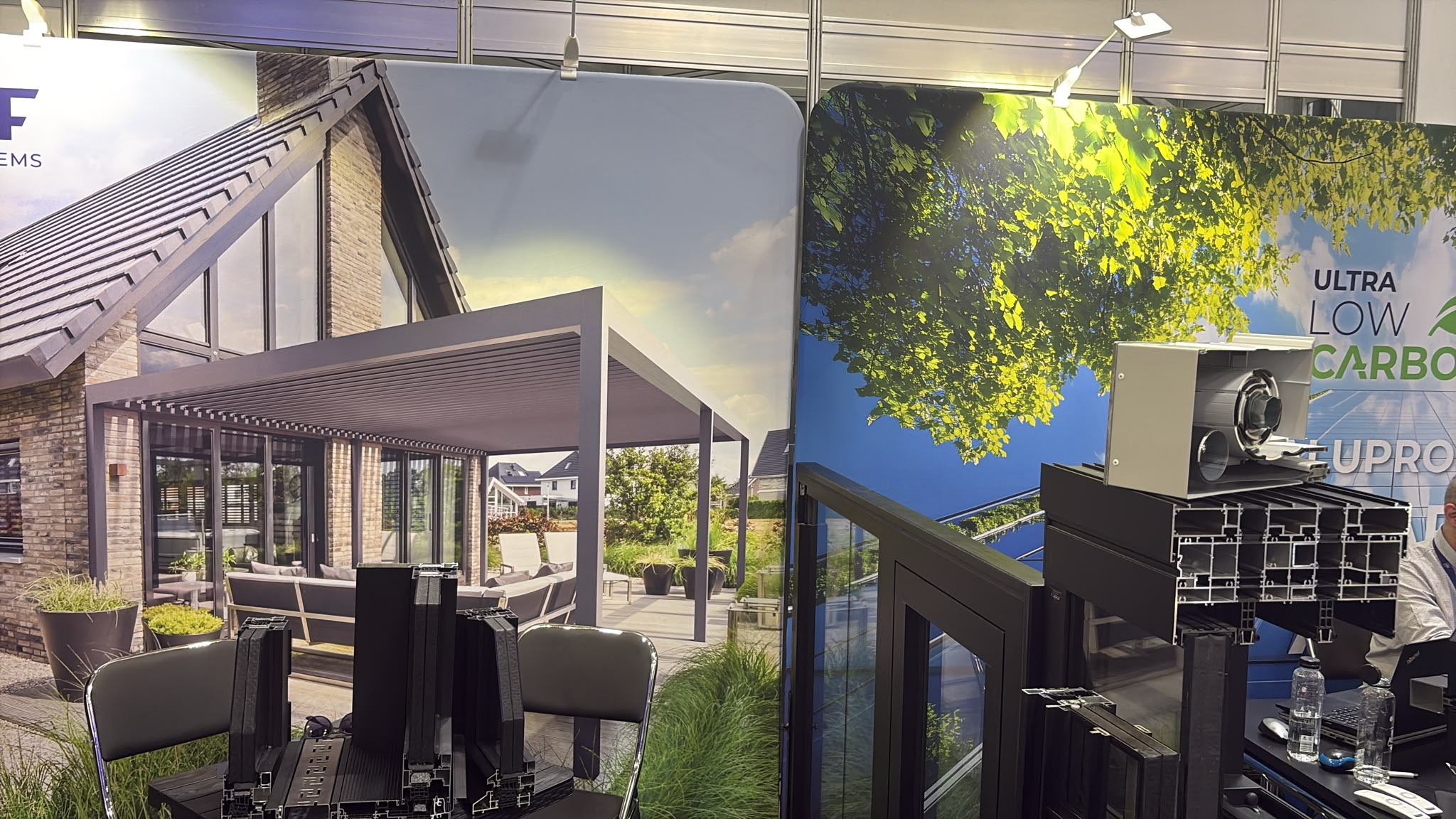
When companies plan their presence at a trade show, the exhibition stand is one of the most important investments they have to make. It needs to attract attention, communicate the brand clearly, create a comfortable space for conversations, and support the sales team throughout the event. At the same time, it needs to be practical enough to transport, install, store, and reuse.
This is one of the main reasons why more companies are moving away from traditional exhibition systems and choosing textile walls, textile lightboxes, and portable exhibition solutions instead.
The difference is not only visual. Textile systems can also change the way companies manage logistics, installation, storage, and the overall cost of participating in multiple exhibitions.
One of the first advantages is weight.
Traditional exhibition systems can involve heavy structures, rigid panels, wooden elements, and large quantities of additional materials. Depending on the design, transporting these components can require significant space and specialized logistics.
Textile walls are generally much lighter because they combine lightweight frames with printed fabric graphics. This makes them easier to handle and reduces the amount of equipment required to move the stand from one location to another.
For companies attending exhibitions in different cities or countries, this can make a significant difference. A lighter stand is easier to pack, transport, unpack, and store, which can simplify the entire exhibition process.
Transport is closely connected to this advantage.
A traditional custom-built stand may require several pallets or a large transport vehicle, particularly when it includes large rigid panels and complex structures. This can increase transportation costs, especially when a company participates in several international events throughout the year.
By comparison, portable exhibition stands based on modular frames and textile graphics can often be packed into compact transport cases or bags. This allows companies to move their exhibition systems more efficiently and makes them easier to reuse at different venues.
Installation is another important consideration.
Traditional exhibition stands can require specialized teams, tools, and several hours or even days of installation. The more complex the design, the more dependent the exhibitor becomes on professional installation services.
Modern textile systems are designed with simplicity in mind. Many textile walls use modular frames that can be assembled quickly, while the fabric graphics can be attached to the structure using integrated solutions such as silicone edging.
This means that installation can be faster and, depending on the size and complexity of the stand, may require fewer people.
However, practicality does not mean compromising on visual impact.
This is where textile lightboxes have become particularly popular. Combining large-format fabric graphics with integrated LED lighting creates a bright and highly visible surface that can attract attention from across an exhibition hall.
Unlike traditional printed panels, illuminated textile graphics can create a more modern and premium appearance while maintaining a relatively clean design.
Lighting also helps create visual hierarchy. A company can use illuminated graphics to highlight its logo, a new product, a key message, or a specific campaign, making it easier for visitors to understand what the brand is offering.
Another major advantage is reusability.
A traditional custom-built stand is often designed around one specific exhibition space. If the company participates in another event with a different stand size or layout, significant modifications may be required.
Modular textile systems are designed to be adapted.
A company can use the same basic structure at different events and change the configuration depending on the available space. Additional elements can be added when more space is available, while smaller configurations can be created for more compact exhibitions.
The graphics can also be replaced without replacing the entire structure. This allows companies to update their visual communication when they launch a new product, run a new campaign, or simply want a different appearance for a particular event.
This flexibility becomes particularly valuable when a company participates in several exhibitions every year.
Instead of purchasing a completely new stand for every event, the company can build an exhibition system that works across multiple locations and formats.
The final consideration is the total cost of ownership.
The cheapest stand at the beginning is not necessarily the cheapest solution in the long term. Companies need to consider transportation, installation, storage, maintenance, graphic replacement, and the number of times the system can be reused.
For a company participating in one exhibition, a traditional system may sometimes be a suitable option. However, for businesses attending multiple events, portable exhibition stands can offer a more efficient long-term investment because the same infrastructure can be reused and adapted.
The combination of textile walls and textile lightboxes also allows companies to achieve a professional and consistent visual identity without relying on heavy construction elements.
This is particularly relevant for B2B companies that want to maintain the same brand experience across different markets and events. A modular system can become a recognizable part of the company's exhibition strategy rather than a one-time installation.
Ultimately, the decision between traditional exhibition systems and textile solutions depends on the company's objectives, budget, event calendar, and logistical requirements. However, for businesses that participate regularly in trade shows, the advantages of lighter structures, easier transportation, faster installation, strong visual impact, and reusability make textile systems an increasingly attractive alternative.
Textile walls, textile lightboxes, and portable exhibition stands are not simply a different way to build a booth. They represent a more flexible approach to exhibition marketing—one that can reduce logistical complexity, improve the visitor experience, and help companies get more value from their exhibition investment over time.
Reviews